In leadership roles, it's our personal beliefs that are holding us back. Most folks on our teams wouldn't challenge us, many folks wouldn't even notice. Neither do we. There are simply things we don't see until a mirror is held up to our faces. That's where coaching comes in.
What actually happens inside a coaching session? Sara and Mathias share what brought them to coaching, from co-founder tension to figuring out the CEO role. They talk about vulnerable first conversations, awkward homework, practicing difficult conversations, and the questions that helped them turn reflection into action.
I once put sales incentives in place that worked against our product and engineering teams. Our conversation about OKRs brought me back to that experience, and to the questions I wish I had asked first.
Can OKRs fix disjointed priorities, or do they just make deeper problems more visible? Mathias and Sara share what went wrong when they implemented objectives and key results, explore the traps of targets and incentives, and make the case for starting with clear strategy, trust, and a few shared goals.
Leaders tend to talk about accountability only in vague terms. They only look at the person they want to be accountable, only rarely at themselves and what their contributions have been. We argue that accountability starts with you as the leader. You can't hold other people accountable when you haven't set them up for success.
Sara and Mathias explore why accountability breaks down at work, arguing it's usually a failure of clear leadership rather than a people problem. They offer a practical three-part framework, setting clear expectations, giving regular feedback, and coaching or mentoring based on someone's experience level, along with a set of reflective questions leaders can use to spot their own role in accountability breakdowns.
This post connects its title to Jerry Colonna's "shoulder to shoulder" leadership posture, then shows how Sara and Mathias used it at their own offsite by getting vulnerable with their team first. The real point: good offsites depend on honesty and pre-work before the room and follow-through after it, not the venue or activities.
Most people hear "offsite" and picture trust falls, endless slide decks, and money spent just to land back where you started. Mathias and Sara unpack what actually makes an offsite worth the investment, from prep work weeks in advance to why even co-located teams need one, plus the Palm Springs tennis story you didn’t ask for.
A product leadership summit became a live demonstration of how business jargon covers uncertainty and signals belonging. A reflection on insider language, industry echo chambers, and the value of a terminology audit.
What do business jargon and cults have in common? Mathias and Sara unpack how buzzwords and acronyms create belonging for some and exclusion for others, hide missing decisions, and leave teams guessing. They share practical ways to replace vague language with shared understanding.
Why do most company values end up as forgotten murals on a wall? Mathias and Sara unpack what actually makes values useful, and share the messy, real trade-offs (layoffs, burnout, "brilliant assholes") where values either prove their worth or fall apart completely.
In this post, Sara reflects on the phrase "the way you do anything is the way you do everything," a lesson passed down from her parents. She connects it to the small, unglamorous acts of care that shape everything else: sharpening a knife, showing up fully for the small stuff. The post ties into the latest podcast episode, where Sara and Mathias geek out about kitchen knives, good tools kept well, and what that ritual reveals about how you run a meeting or treat the people around you.
What do sharp knives, dull knives, and knife guys named Gary have to do with good management? In this episode, Sara and Mathias trade cooking stories and kitchen mishaps on the way to a bigger point: how you care for your tools says a lot about how you show up for your team.
AI note taking tools are supposed to make your meetings more effective, but are they really making them better? The illusion of notes is that you can easily go back any time and look at what everyone and anyone has said. However, that may not be what’s making a meeting truly effective.
Meetings, meetings, meetings. It's the topic that gets its own chapter in Sara and Mathias's book, and for good reason: studies show 72% of meetings are ineffective. In this episode, they dig into why meetings go so wrong (hint: it usually starts with a missing agenda) and share the framework they use to fix them, including the 'three C's of meetings' and a simple habit that can transform your calendar in 90 days.
Feedback usually fails because it's vague, rare, or saved up for a scary annual review instead of being regular and specific. Mathias and Sara dig into why that happens—blind spots in meetings, power dynamics, fear of reaction–and what actually fixes it: tying feedback to clear expectations, keeping a running feedback log, and ditching empty praise like
Most reorgs fail, and it's not a mystery why. After recording episode two of our podcast, I couldn't stop thinking about the patterns behind that failure rate: the magic-button thinking, the human cost nobody puts on the spreadsheet, the middle managers left holding a message they never got to understand. This is what I wish I'd known walking into every reorg I've been part of.
Sara Hicks and Mathias Meyer examine why organizational restructures (aka reorgs) so often fail: they are treated as quick fixes while overlooking the disruption, stress, and loss of trust they create for people. They argue that leaders should only make structural changes with a clear purpose, realistic expectations, transparent communication, and a plan to support managers and teams through the transition.
As we launch season one of The Intentional Organization Podcast, with episode one on navigating difficult conversations, Sara found herself in two coaching sessions last week on the exact same theme, plus a hard conversation of her own. In this honest reflection, Sara shares what she's learned about where difficult conversations really start, why piling on months of frustration backfires, and what it costs to fall out of step with someone you work closely with. This is a must-read and must-listen for founders, leaders, and anyone who's been dreading a conversation they know is overdue.
This episode is about difficult conversations at work and in leadership. Mathias and Sara explore why these conversations feel so stressful, and why they often leave a longer emotional trail than we expect.
It takes up to eight days of being fully disconnected to switch off from work - and every check-in resets the clock. What that means for your next vacation, and for the example you set for your team.
During our European book tour for our book, The Intentional Organization, we gave a conference talk on intentional communication and “not dropping the baton” in teams, all while we were working through our own dropped baton as co-founders. In this honest reflection, Sara shares lessons from navigating conflict, reconnecting through our RAD framework (Reflect, Assess, Do), and rediscovering that our partnership—not the book or business—is the true vessel. This is a must-read for founders, leaders, and teams navigating the messy beauty of working relationships.
We're thrilled to announce that the book is finally available for purchase. To celebrate this big occasion, we recorded a podcast episode to share a few stories about the origins of the book along with some thoughts on our favorite chapters. We hope you enjoy it!
We’re delighted to share that our book is now available. To celebrate this big occasion, we recorded a podcast episode to share a few stories about the origins of the book along with some thoughts on our favorite chapters. We hope you enjoy it! And, hint, hint, this the first of many more episodes to come, so stay tuned!
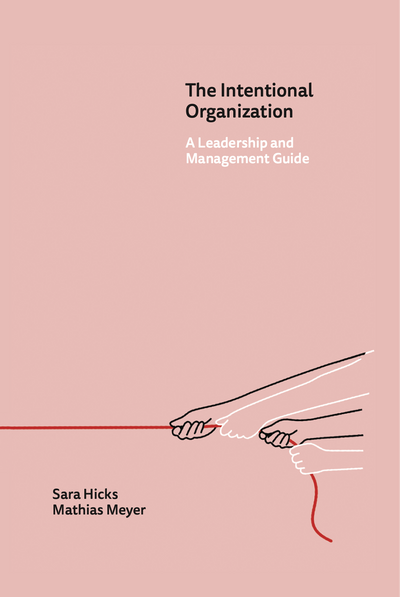
Back in 2020, we started working on a book to help other founders, executives, and senior leaders on their journey in management. Today we're thrilled to announce that the book is finally available for preorder. Read on for more on the cover and our journey!
“What is my role as CTO?” is one of the most common questions I discuss with my clients. If they don’t bring it up on their own, it’s the first question I bring up. In this post, we break down the different types of personas, roles, and responsibilities CTOs commonly take on.
“What is my role as CTO?” is one of the most common questions I discuss with my clients. If they don’t bring it up on their own, it’s the first question I bring up. On the surface, this should be easy to answer, right? Technology, code, features, product, and other hand-waving gestures using fuzzy terms that aren’t helpful. The reality is that most people we work with don’t have a clear picture of what their role is, what responsibilities are tied to it, and what they contribute to the business as a whole.
Often, when I introduce myself, I say, “I have grown up in tech.” It’s true. I’ve gone from Product Manager to CPO. I’ve co-founded and led a venture-backed startup all the way from idea to acquisition. My equity gained value more than a handful of times, which is a rarity in the world of startups. I’ve gone from leading a bootstrapped company with three employees to teams of hundreds at a publicly-traded monolith doing billions of dollars in revenue. I’ve seen and experienced a lot. And yet, I knew that I was done and ready to call it quits over a year ago. I recently left my executive leadership position at Mailchimp and, in doing so, I left a nearly 30-year career in tech.
After three years of not meeting in person, we traveled to far flung Nova Scotia in Canada to reconnect and come up with a plan for 2023. Here is everything we did to make it successful and to ensure there is plenty of room for serendipity during our time together.
Why is it so frickin hard to provide people with valuable feedback, let alone getting meaningful feedback from others? One of two things tends to be the case: we either don’t know how to ask for good feedback, or we don’t know how to give it. In this post we will explore how to build a feedback muscle and become a feedback magnet.
As leadership coaches, we are often asked what a coaching session is like, when it’s a good time to start coaching, and about our personal experiences with coaching. We set out to answer those questions in this two-part series reflecting on our respective coaching journeys. This post reflects Mathias’ experience on coaching.
There’s a need to focus on a different kind of organization: one that truly takes care of its employees, that treats everyone as humans, that invites everyone to the table. Many startups focus only on the business side of things as they grow, neglecting the organization, without which their business wouldn’t exist. The Intentional Organisation is our contribution to providing guidance and ideas on how founders, entrepreneurs, and executives can change that. An intentional organization is continuously learning and inclusive at its heart. It invests in its people and cares about the craft of how things are made. It’s aiming for clarity wherever there is uncertainty.
As leadership coaches, we are often asked what a coaching session is like, when it’s a good time to start coaching, and about our personal experiences with coaching. We set out to answer those questions in this two-part series reflecting on our respective coaching journeys. Part One is Sara’s experience, and stay tuned for Part Two with Mathias’ reflections on coaching.
When everything around you is on fire, it’s easiest to point fingers elsewhere and find someone to blame. It’s tempting to just put your head in the sand and pretend nothing is happening, waiting for the storm to pass. But most issues that founders and entrepreneurs experience on a daily basis don’t go away on their own;they’re likely only getting worse. The solution is simple: We accept where we are and that we need to take responsibility and do something. We’re here now. What are we going to do?
Great products flow from diverse teams, deliberate processes, and a culture that nurtures different ideas and perspectives. With The Intentional Organization, you’ll learn how to create an environment that values people as humans rather than resources, solve the most common organizational problems in simple and practical ways, and find inspiration on how to lead your teams more effectively.