What Are We Asking OKRs to Fix?
I once put sales incentives in place that worked against our product and engineering teams. Our conversation about OKRs brought me back to that experience, and to the questions I wish I had asked first.
How everyday choices, shared values, and working relationships shape an organization.
I once put sales incentives in place that worked against our product and engineering teams. Our conversation about OKRs brought me back to that experience, and to the questions I wish I had asked first.
Can OKRs fix disjointed priorities, or do they just make deeper problems more visible? Mathias and Sara share what went wrong when they implemented objectives and key results, explore the traps of targets and incentives, and make the case for starting with clear strategy, trust, and a few shared goals.
Sara and Mathias explore why accountability breaks down at work, arguing it's usually a failure of clear leadership rather than a people problem. They offer a practical three-part framework, setting clear expectations, giving regular feedback, and coaching or mentoring based on someone's experience level, along with a set of reflective questions leaders can use to spot their own role in accountability breakdowns.
This post connects its title to Jerry Colonna's "shoulder to shoulder" leadership posture, then shows how Sara and Mathias used it at their own offsite by getting vulnerable with their team first. The real point: good offsites depend on honesty and pre-work before the room and follow-through after it, not the venue or activities.
Most people hear "offsite" and picture trust falls, endless slide decks, and money spent just to land back where you started. Mathias and Sara unpack what actually makes an offsite worth the investment, from prep work weeks in advance to why even co-located teams need one, plus the Palm Springs tennis story you didn’t ask for.
A product leadership summit became a live demonstration of how business jargon covers uncertainty and signals belonging. A reflection on insider language, industry echo chambers, and the value of a terminology audit.
What do business jargon and cults have in common? Mathias and Sara unpack how buzzwords and acronyms create belonging for some and exclusion for others, hide missing decisions, and leave teams guessing. They share practical ways to replace vague language with shared understanding.
Why do most company values end up as forgotten murals on a wall? Mathias and Sara unpack what actually makes values useful, and share the messy, real trade-offs (layoffs, burnout, "brilliant assholes") where values either prove their worth or fall apart completely.
In this post, Sara reflects on the phrase "the way you do anything is the way you do everything," a lesson passed down from her parents. She connects it to the small, unglamorous acts of care that shape everything else: sharpening a knife, showing up fully for the small stuff. The post ties into the latest podcast episode, where Sara and Mathias geek out about kitchen knives, good tools kept well, and what that ritual reveals about how you run a meeting or treat the people around you.
What do sharp knives, dull knives, and knife guys named Gary have to do with good management? In this episode, Sara and Mathias trade cooking stories and kitchen mishaps on the way to a bigger point: how you care for your tools says a lot about how you show up for your team.
Feedback is already challenging as it is. When different cultures come into the mix, like in distributed teams, additional barriers come into play. What's good to one person means okay to another. What one person considers a good start another considers complete garbage, requiring a do-over. Crossing the cultural boundaries from a Californian to a German, these challenges can quickly create tension and miscommunication, leading to frustrations. The solution starts with awareness and empathy.
Most reorgs fail, and it's not a mystery why. After recording episode two of our podcast, I couldn't stop thinking about the patterns behind that failure rate: the magic-button thinking, the human cost nobody puts on the spreadsheet, the middle managers left holding a message they never got to understand. This is what I wish I'd known walking into every reorg I've been part of.
Sara Hicks and Mathias Meyer examine why organizational restructures (aka reorgs) so often fail: they are treated as quick fixes while overlooking the disruption, stress, and loss of trust they create for people. They argue that leaders should only make structural changes with a clear purpose, realistic expectations, transparent communication, and a plan to support managers and teams through the transition.
During our European book tour for our book, The Intentional Organization, we gave a conference talk on intentional communication and “not dropping the baton” in teams, all while we were working through our own dropped baton as co-founders. In this honest reflection, Sara shares lessons from navigating conflict, reconnecting through our RAD framework (Reflect, Assess, Do), and rediscovering that our partnership—not the book or business—is the true vessel. This is a must-read for founders, leaders, and teams navigating the messy beauty of working relationships.
We're thrilled to announce that the book is finally available for purchase. To celebrate this big occasion, we recorded a podcast episode to share a few stories about the origins of the book along with some thoughts on our favorite chapters. We hope you enjoy it!
We’re delighted to share that our book is now available. To celebrate this big occasion, we recorded a podcast episode to share a few stories about the origins of the book along with some thoughts on our favorite chapters. We hope you enjoy it! And, hint, hint, this the first of many more episodes to come, so stay tuned!
Back in 2020, we started working on a book to help other founders, executives, and senior leaders on their journey in management. Today we're thrilled to announce that the book is finally available for preorder. Read on for more on the cover and our journey!
After three years of not meeting in person, we traveled to far flung Nova Scotia in Canada to reconnect and come up with a plan for 2023. Here is everything we did to make it successful and to ensure there is plenty of room for serendipity during our time together.
There’s a need to focus on a different kind of organization: one that truly takes care of its employees, that treats everyone as humans, that invites everyone to the table. Many startups focus only on the business side of things as they grow, neglecting the organization, without which their business wouldn’t exist. The Intentional Organisation is our contribution to providing guidance and ideas on how founders, entrepreneurs, and executives can change that. An intentional organization is continuously learning and inclusive at its heart. It invests in its people and cares about the craft of how things are made. It’s aiming for clarity wherever there is uncertainty.
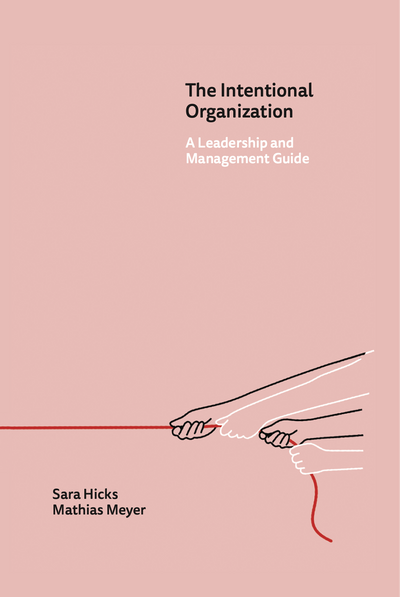
Great products flow from diverse teams, deliberate processes, and a culture that nurtures different ideas and perspectives. With The Intentional Organization, you’ll learn how to create an environment that values people as humans rather than resources, solve the most common organizational problems in simple and practical ways, and find inspiration on how to lead your teams more effectively.