What actually happens inside a coaching session? Sara and Mathias share what brought them to coaching, from co-founder tension to figuring out the CEO role. They talk about vulnerable first conversations, awkward homework, practicing difficult conversations, and the questions that helped them turn reflection into action.
This post connects its title to Jerry Colonna's "shoulder to shoulder" leadership posture, then shows how Sara and Mathias used it at their own offsite by getting vulnerable with their team first. The real point: good offsites depend on honesty and pre-work before the room and follow-through after it, not the venue or activities.
A product leadership summit became a live demonstration of how business jargon covers uncertainty and signals belonging. A reflection on insider language, industry echo chambers, and the value of a terminology audit.
What do business jargon and cults have in common? Mathias and Sara unpack how buzzwords and acronyms create belonging for some and exclusion for others, hide missing decisions, and leave teams guessing. They share practical ways to replace vague language with shared understanding.
Meetings, meetings, meetings. It's the topic that gets its own chapter in Sara and Mathias's book, and for good reason: studies show 72% of meetings are ineffective. In this episode, they dig into why meetings go so wrong (hint: it usually starts with a missing agenda) and share the framework they use to fix them, including the 'three C's of meetings' and a simple habit that can transform your calendar in 90 days.
Feedback is already challenging as it is. When different cultures come into the mix, like in distributed teams, additional barriers come into play. What's good to one person means okay to another. What one person considers a good start another considers complete garbage, requiring a do-over. Crossing the cultural boundaries from a Californian to a German, these challenges can quickly create tension and miscommunication, leading to frustrations. The solution starts with awareness and empathy.
Feedback usually fails because it's vague, rare, or saved up for a scary annual review instead of being regular and specific. Mathias and Sara dig into why that happens—blind spots in meetings, power dynamics, fear of reaction–and what actually fixes it: tying feedback to clear expectations, keeping a running feedback log, and ditching empty praise like
Most reorgs fail, and it's not a mystery why. After recording episode two of our podcast, I couldn't stop thinking about the patterns behind that failure rate: the magic-button thinking, the human cost nobody puts on the spreadsheet, the middle managers left holding a message they never got to understand. This is what I wish I'd known walking into every reorg I've been part of.
Sara Hicks and Mathias Meyer examine why organizational restructures (aka reorgs) so often fail: they are treated as quick fixes while overlooking the disruption, stress, and loss of trust they create for people. They argue that leaders should only make structural changes with a clear purpose, realistic expectations, transparent communication, and a plan to support managers and teams through the transition.
As we launch season one of The Intentional Organization Podcast, with episode one on navigating difficult conversations, Sara found herself in two coaching sessions last week on the exact same theme, plus a hard conversation of her own. In this honest reflection, Sara shares what she's learned about where difficult conversations really start, why piling on months of frustration backfires, and what it costs to fall out of step with someone you work closely with. This is a must-read and must-listen for founders, leaders, and anyone who's been dreading a conversation they know is overdue.
This episode is about difficult conversations at work and in leadership. Mathias and Sara explore why these conversations feel so stressful, and why they often leave a longer emotional trail than we expect.
During our European book tour for our book, The Intentional Organization, we gave a conference talk on intentional communication and “not dropping the baton” in teams, all while we were working through our own dropped baton as co-founders. In this honest reflection, Sara shares lessons from navigating conflict, reconnecting through our RAD framework (Reflect, Assess, Do), and rediscovering that our partnership—not the book or business—is the true vessel. This is a must-read for founders, leaders, and teams navigating the messy beauty of working relationships.
After three years of not meeting in person, we traveled to far flung Nova Scotia in Canada to reconnect and come up with a plan for 2023. Here is everything we did to make it successful and to ensure there is plenty of room for serendipity during our time together.
Why is it so frickin hard to provide people with valuable feedback, let alone getting meaningful feedback from others? One of two things tends to be the case: we either don’t know how to ask for good feedback, or we don’t know how to give it. In this post we will explore how to build a feedback muscle and become a feedback magnet.
Remote meetings via video pose a whole new set of challenges. Distractions abound and are only a keystroke away. How do you make sure you stay focused and present even as meetings via video make up the larger part of your day? In this post we go into a few strategies that have worked for us.
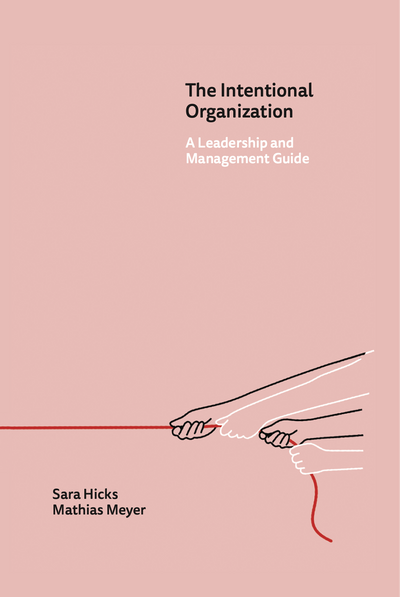
Great products flow from diverse teams, deliberate processes, and a culture that nurtures different ideas and perspectives. With The Intentional Organization, you’ll learn how to create an environment that values people as humans rather than resources, solve the most common organizational problems in simple and practical ways, and find inspiration on how to lead your teams more effectively.