Most reorgs fail, and it's not a mystery why. After recording episode two of our podcast, I couldn't stop thinking about the patterns behind that failure rate: the magic-button thinking, the human cost nobody puts on the spreadsheet, the middle managers left holding a message they never got to understand. This is what I wish I'd known walking into every reorg I've been part of.
Sara Hicks and Mathias Meyer examine why organizational restructures (aka reorgs) so often fail: they are treated as quick fixes while overlooking the disruption, stress, and loss of trust they create for people. They argue that leaders should only make structural changes with a clear purpose, realistic expectations, transparent communication, and a plan to support managers and teams through the transition.
“What is my role as CTO?” is one of the most common questions I discuss with my clients. If they don’t bring it up on their own, it’s the first question I bring up. In this post, we break down the different types of personas, roles, and responsibilities CTOs commonly take on.
“What is my role as CTO?” is one of the most common questions I discuss with my clients. If they don’t bring it up on their own, it’s the first question I bring up. On the surface, this should be easy to answer, right? Technology, code, features, product, and other hand-waving gestures using fuzzy terms that aren’t helpful. The reality is that most people we work with don’t have a clear picture of what their role is, what responsibilities are tied to it, and what they contribute to the business as a whole.
Often, when I introduce myself, I say, “I have grown up in tech.” It’s true. I’ve gone from Product Manager to CPO. I’ve co-founded and led a venture-backed startup all the way from idea to acquisition. My equity gained value more than a handful of times, which is a rarity in the world of startups. I’ve gone from leading a bootstrapped company with three employees to teams of hundreds at a publicly-traded monolith doing billions of dollars in revenue. I’ve seen and experienced a lot. And yet, I knew that I was done and ready to call it quits over a year ago. I recently left my executive leadership position at Mailchimp and, in doing so, I left a nearly 30-year career in tech.
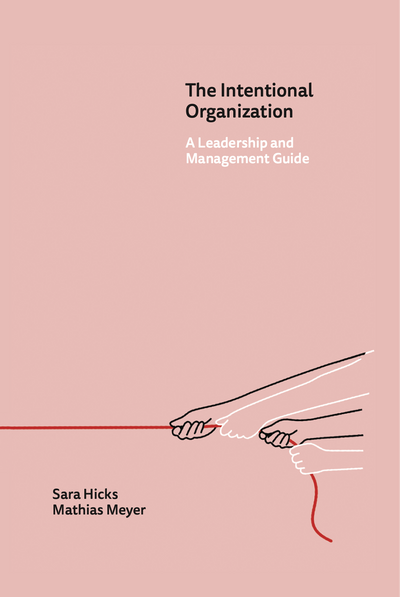
There’s a need to focus on a different kind of organization: one that truly takes care of its employees, that treats everyone as humans, that invites everyone to the table. Many startups focus only on the business side of things as they grow, neglecting the organization, without which their business wouldn’t exist. The Intentional Organisation is our contribution to providing guidance and ideas on how founders, entrepreneurs, and executives can change that. An intentional organization is continuously learning and inclusive at its heart. It invests in its people and cares about the craft of how things are made. It’s aiming for clarity wherever there is uncertainty.
When everything around you is on fire, it’s easiest to point fingers elsewhere and find someone to blame. It’s tempting to just put your head in the sand and pretend nothing is happening, waiting for the storm to pass. But most issues that founders and entrepreneurs experience on a daily basis don’t go away on their own;they’re likely only getting worse. The solution is simple: We accept where we are and that we need to take responsibility and do something. We’re here now. What are we going to do?
Great products flow from diverse teams, deliberate processes, and a culture that nurtures different ideas and perspectives. With The Intentional Organization, you’ll learn how to create an environment that values people as humans rather than resources, solve the most common organizational problems in simple and practical ways, and find inspiration on how to lead your teams more effectively.